Tag Archives: bosvean

Helford to Trebah gardens using the passenger ferry

The village of Helford, and the gardens of Trebah are both picturesque places, there’s no better way of travelling between the two than by boat across the historic river crossing between Helford and Helford Passage. Helford river is tidal, it’s worth checking the ferry times for the day as crossings are paused when the tide is very low. The service is operated by Helford River Boats between April and October.
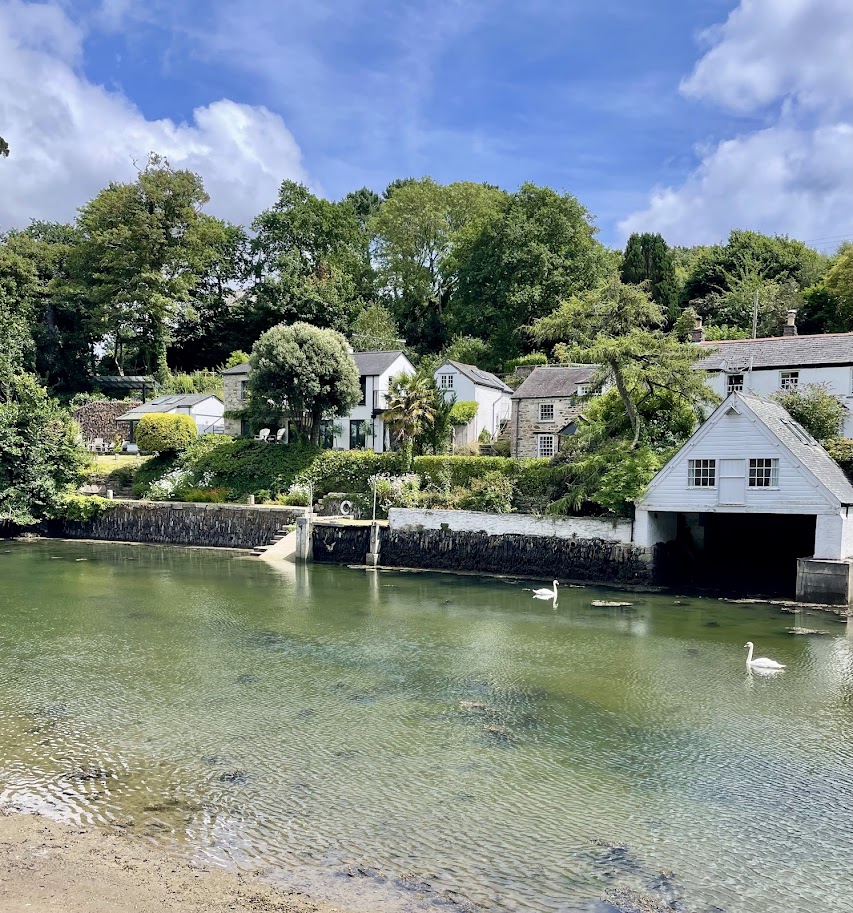
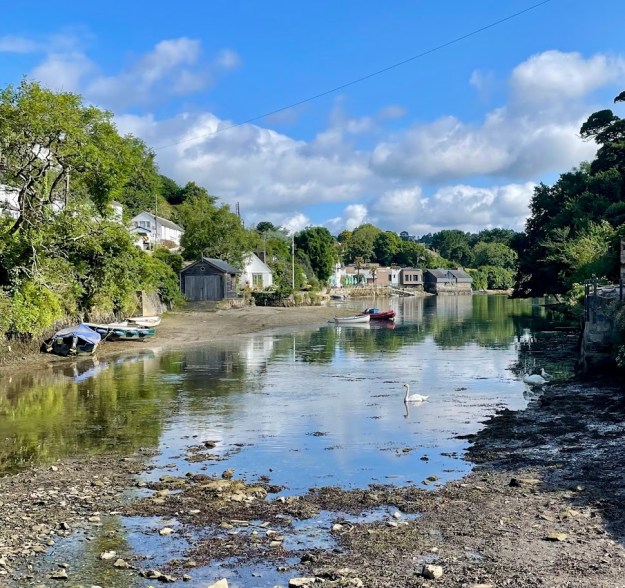
Helford village has a large, reasonably priced pay and display car park that makes a great starting point. Leave the car park, heading down hill, cross the river and keep the river on your right, to Ferry Point. This begins as a quiet road walk, passing the village shop and Shipwrights Arms pub, as the road heads steeply up hill follow the lane in front that continues alongside the river.

The Ferry is operated from the opposite side of the river at Helford Passage, to call the ferry across open the yellow circular sign to signal that you are waiting. Take a seat, and watch the small ferry head towards towards you. Once onboard, enjoy the different vantage point from the ferry that this short journey gives you, weaving between moored boats and operating as a water taxi when required.
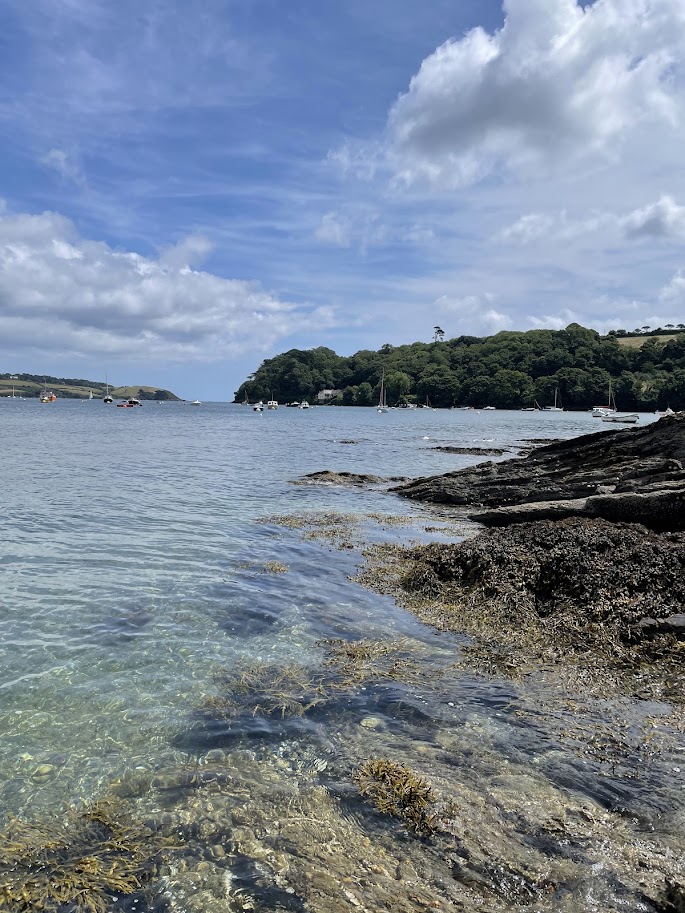
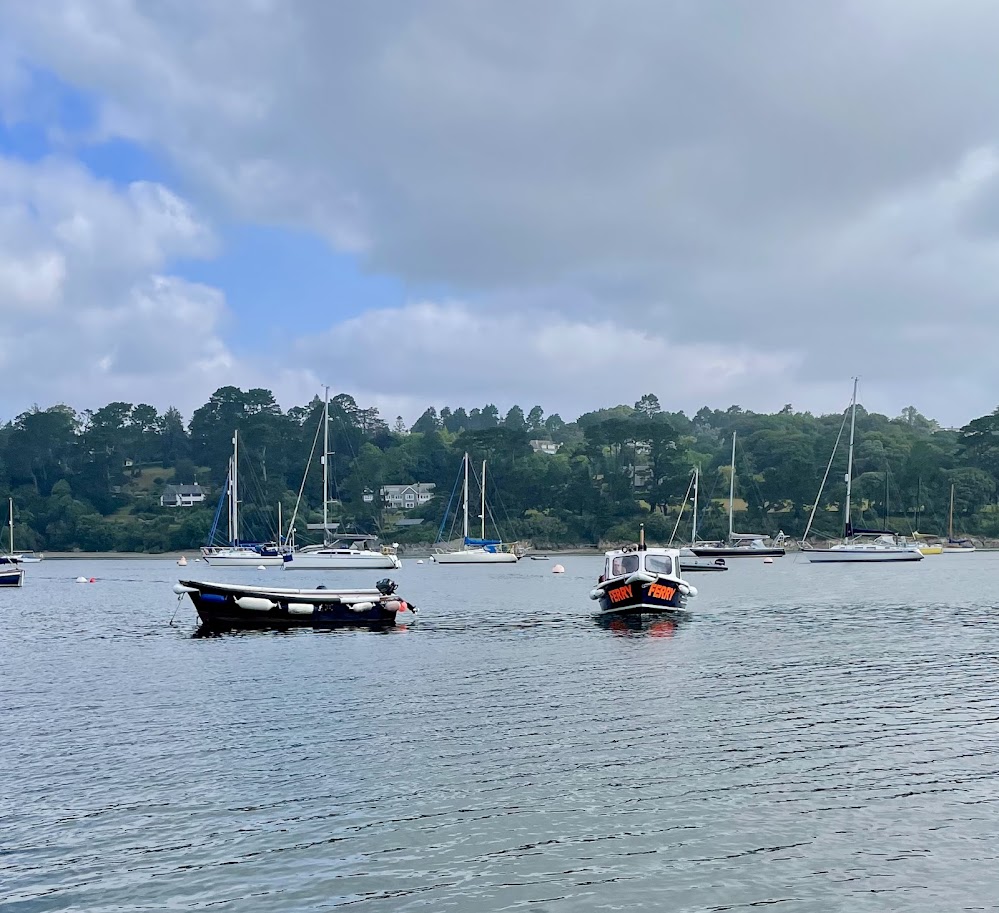
On arrival at Helford Passage walk up to the quiet road and head right along the road at the top of the beach (dogs are not allowed on the beach). At the far end of the beach a footpath heads uphill for a short distance, before levelling out for an easy walk towards the river mouth that can be seen in the distance. Join a road for a short distance down hill, and see Trebah gardens on your left and Trebah beach on your right, neither places can be entered from this path. Continue along the path, across a field that joins a lane after a short distance. If you head up hill a path leads to Trebah entrance, if you head down hill you arrive at the pretty beach at Durgan, passing the entrance to Glendurgan gardens.
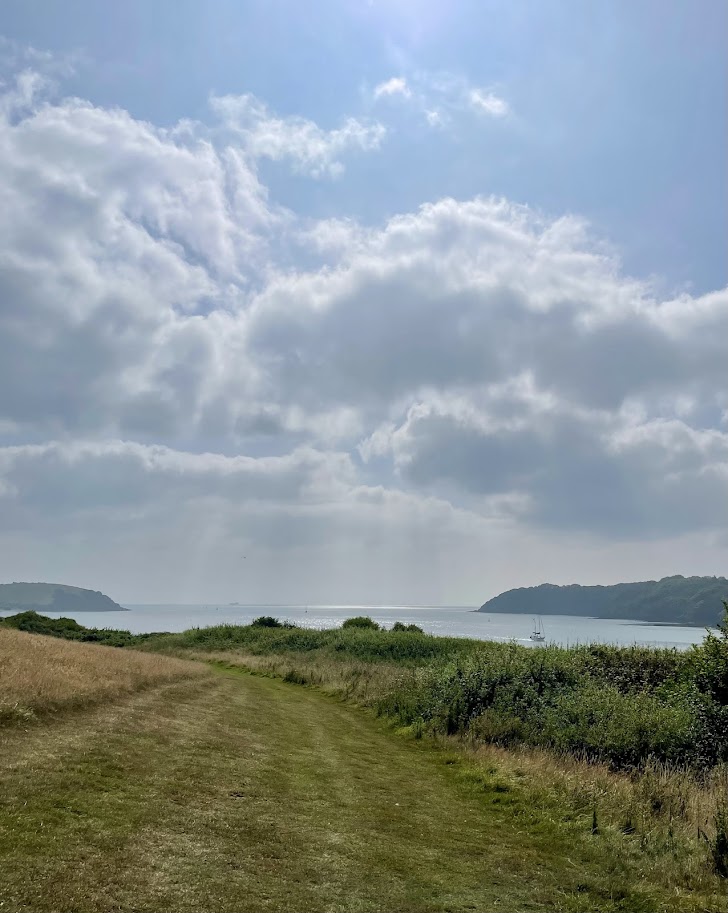
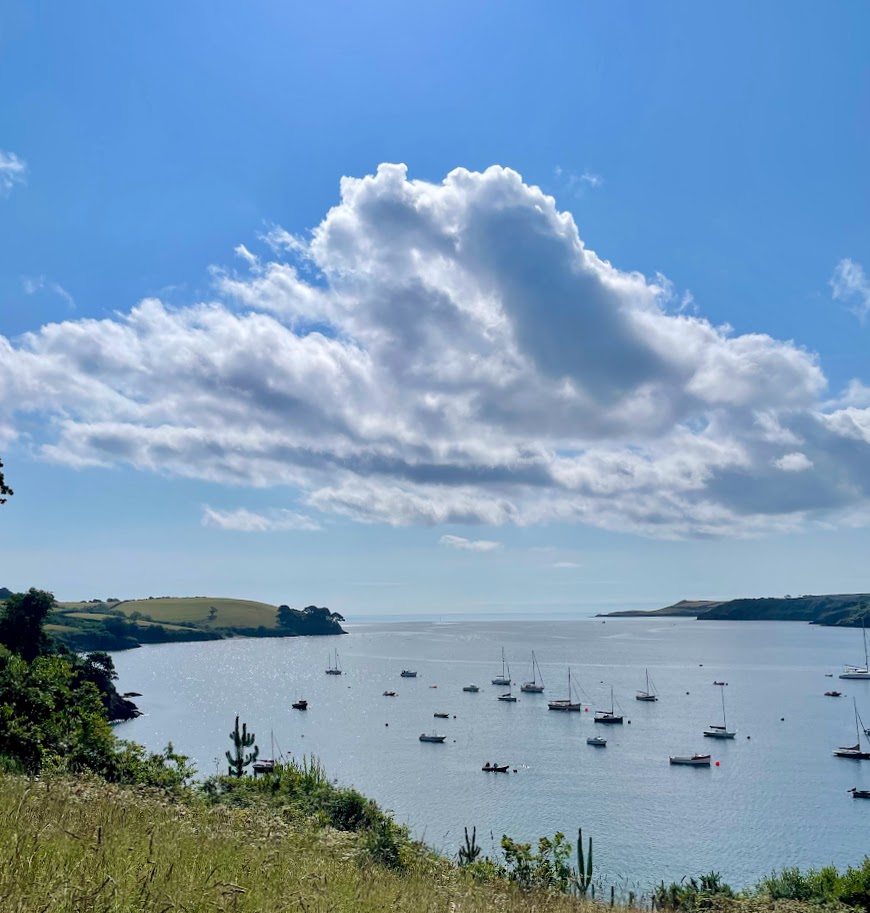
Trebah reception provides you with the information needed to make the most of your visit. Here there is a café, gift shop and area selling plants. Dogs on short leads are welcome at Trebah.
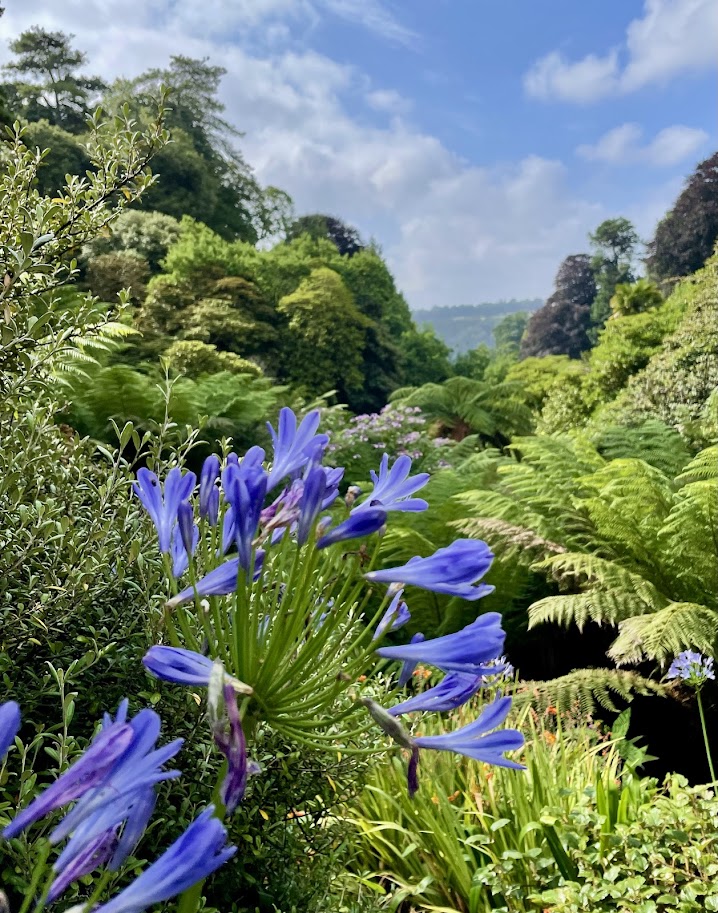
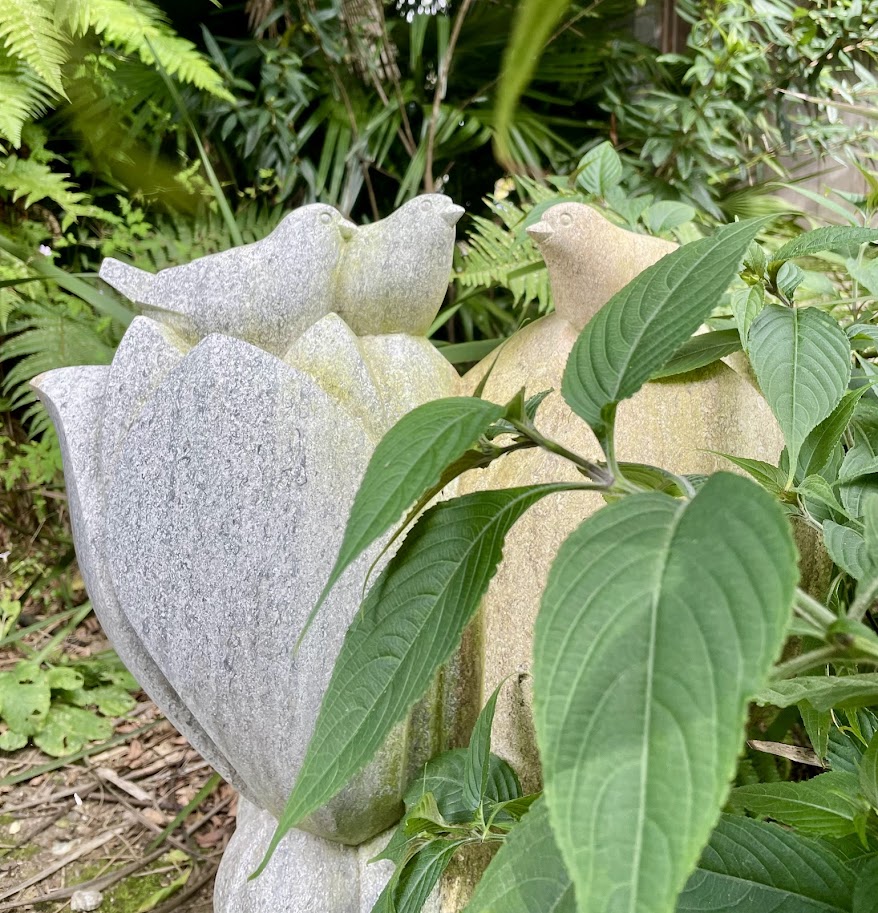
Trebah gardens are full of interesting areas, shaded seating under tree ferns and seats on high ground overlooking the gardens with distant glimpses of Helford river. Ponds magnify the floral beauty around them, in summer the pastel coloured hydrangeas reflecting in the ponds are a stunning sight to behold. Paths through the chunky stemmed gunnera, with their giant leaves high overhead evoke the intrepid explorer feeling! The gardens are a relaxing haven to immerse yourself in the beautiful natural environment.
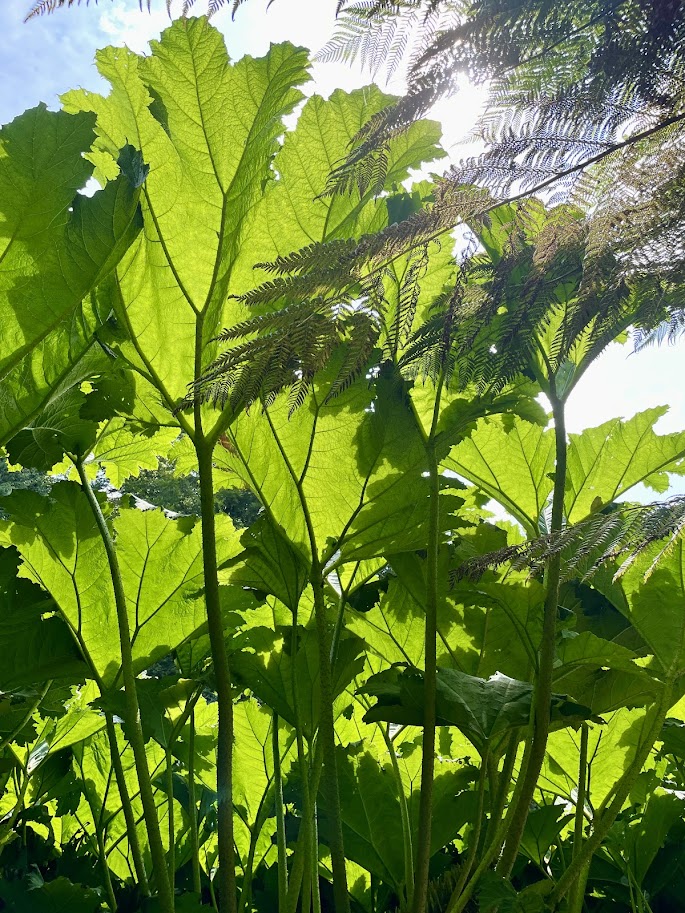
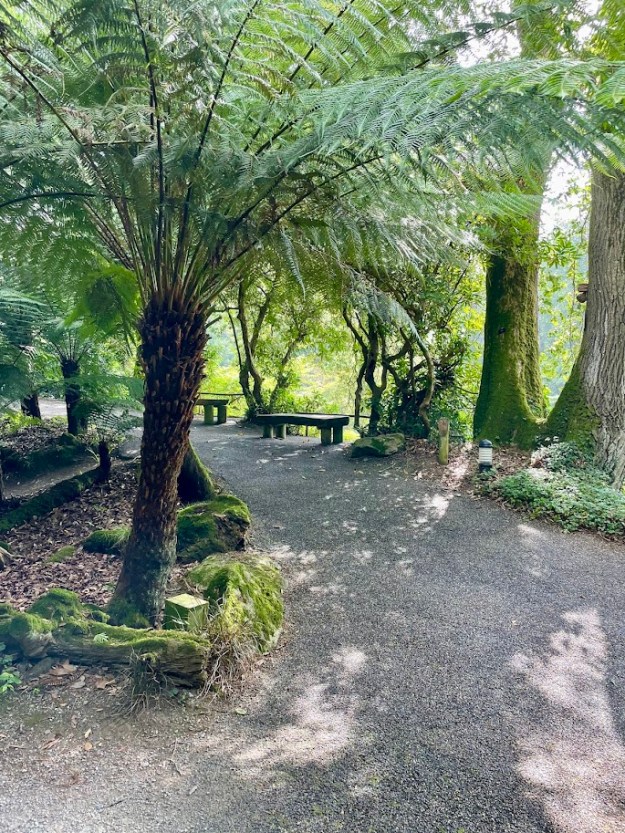
Before leaving the gardens it’s worth spending some time on Trebah’s private beach, a great place for a paddle or a swim. All this can be topped off with and an ice cream, available from the beach, while watching beach and river life.
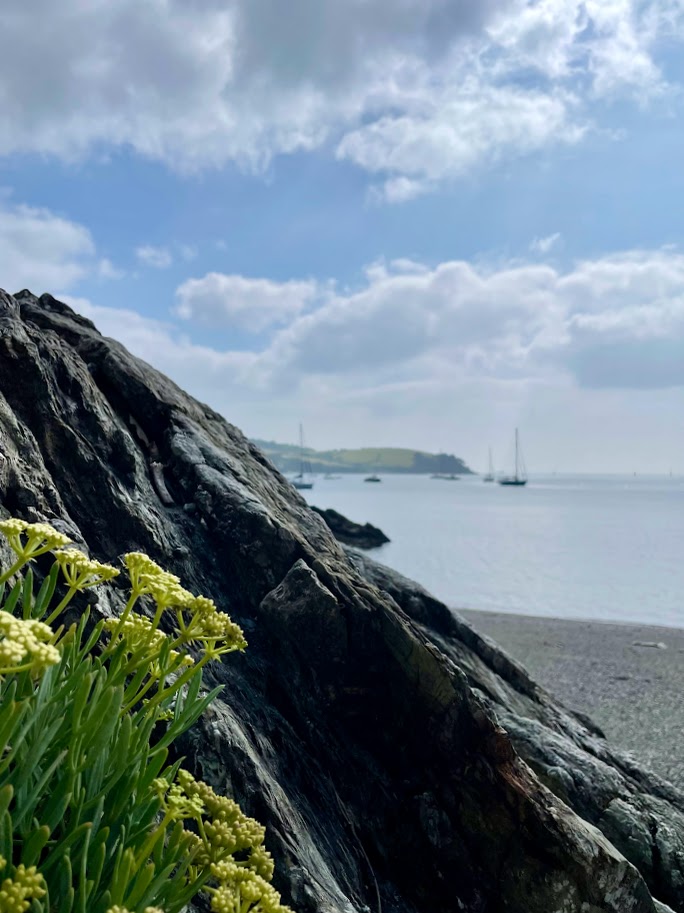
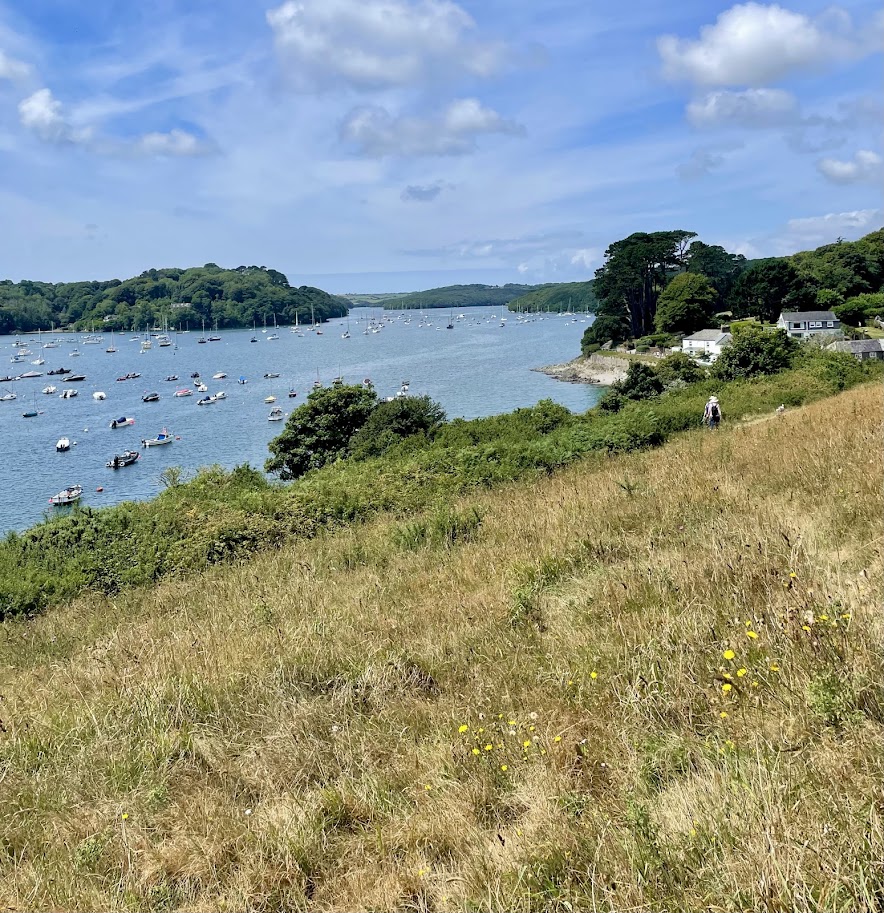
Head back up through the gardens to leave near the entrance. The path back to the ferry in this direction provides views inland, you may even notice Trebah beach from a different angle. From Helford Passage there is the opportunity to enjoy The Ferry Boat Inn, before catching the ferry back to Helford and reminiscing on the sights you’ve seen.

The Practicalities

The length of the walk varies depending on how much walking you do in the gardens, a likely walk length is approximately 5 miles. The footpath from the ferry to the gardens is quite gentle and about a mile.

In Helford both Holy Mackerel and the Shipwright’s Arms offer great places to eat and are dog friendly. Helford shop offers an opportunity to restock.

The Ferry Boat Inn at Helford River Passage offers food with a great view of the river. It’s dog friendly too.

There are public toilets situated in Helford car park.

Dogs travel for free on the ferry!
A circular walk from Porthallow to Carne, following the river estuary through Gillan, returning on the coast path to Porthallow.

One of the many reasons this walk is so special is that the footpath guides you through a range of habitats and landscapes. Initially through a wooded valley, then crossing fields to Carne where you walk beside the river until it meets the sea, and then follow the coast back to Porthallow. There are also a few secluded beaches only reached on foot.

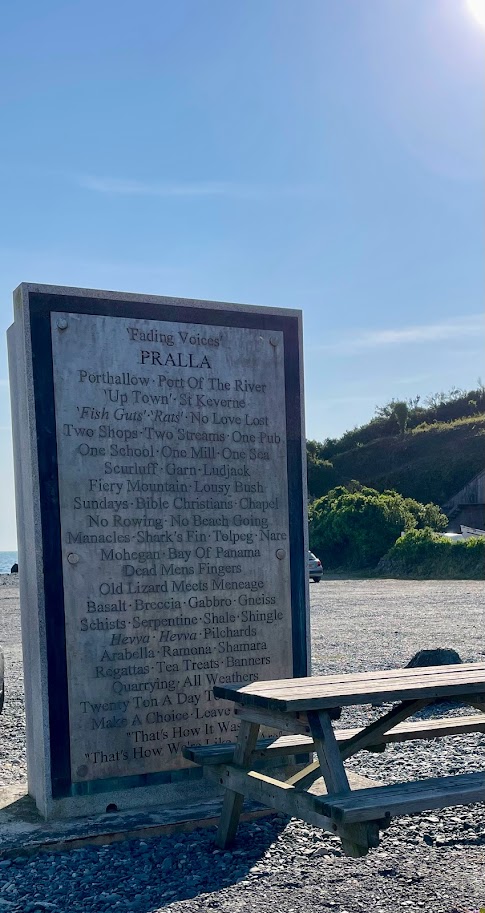
Situated at the top of Porthallow beach is the mid point marker for the Southwest Coast Path. This stone structure stands tall and displays engraved metal plates, on one side capturing the flora and fauna of the Lizard Peninsula, on the other side the ‘Fading Voices‘ of Pralla, the local name for Porthallow. The ‘Fading Voices‘ creates a written record of Cornish dialect, this was and is spoken language, often written by people from outside the area so the spellings are up for debate!

The walk starts heading inland, head up the beach and join the road heading right past the phone box, continue straight ahead past old cottages on your right. Follow the road around to the left for a short distance, before heading up hill take the lane on your right, walking between a terraced row of houses and their gardens on the opposite side of the path. Walk along this valley, initially wooded, across a field before a passing through a wooded area that leads to a wooden bridge and joins a lane heading up hill.

The hamlet of Treglossick comes into view, referred to locally as Ludjack, one of the words engraved on the mid point marker on Porthallow beach. Join the road and turn left, at the T junction turn left, just before a road joins from the left is a footpath on your right up a hedge that crosses several fields. Join a lane, turning left at the top as you reach the ancient hamlet of Trewothack. The footpath weaves around Trewothack, between two large farm sheds before joining a lane that leads you to more fields.

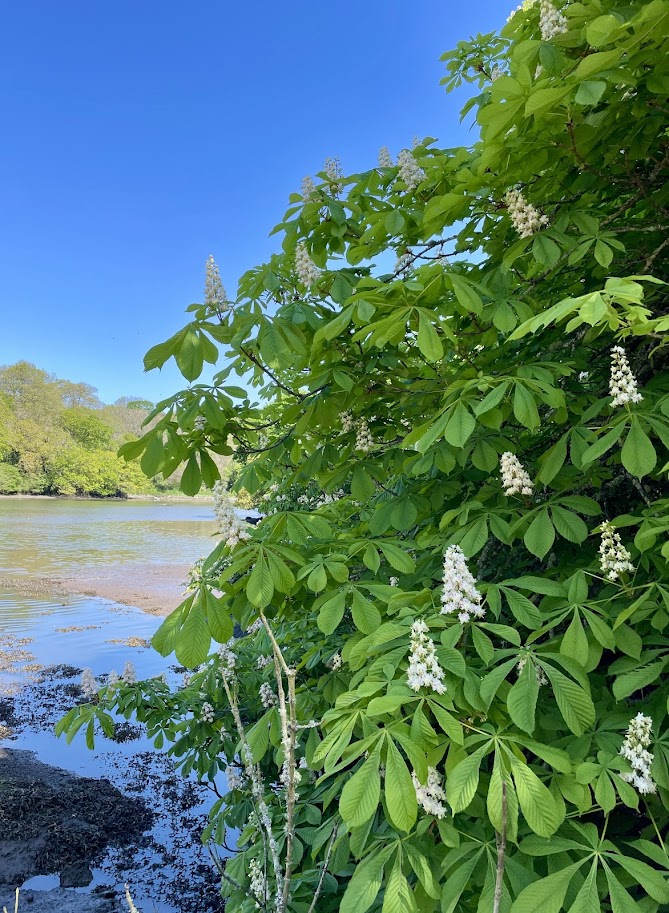
As you cross these fields and head down hill, in the distance on your left you can see the church tower of Manaccan nestled in the trees. On your right you get glimpses of Falmouth Bay in the distance. Join the road for a short distance heading downhill, taking the footpath on your right before the small bridge over the river as you enter Carne. Immediately the path takes you through the sweeping boughs of a magnificent horse chestnut tree. With boughs sweeping out over the river reflected on to the water this is a uniquely beautiful.

This path weaves it’s way along the wooded banks of Gillan estuary, eventually across the small sandy beach of Flushing before reaching Gillan’s sandy shores. Along the way are seats with stunning views and a remote feel. As you leave Flushing the path continues to follow the estuary, looking across to the opposite bank you can see the creek side church of St Anthony. At Gillan the small low headland called The Herra offers natural shelter, seating and a small shingle beach on the far side with views across to Falmouth. Return from The Herra and follow the path alongside a large garden, alongside the estuary eventually reaching Trewarnnevas cliffs that lead on to Nare Point Coastal Lookout Station.

As you continue past Nare Head you notice a change in habitat to a coastal environment, follow the path above the sea to Porthallow.

The practicalities

Approximately 6.5 miles

Porthallow has honesty box car parking on the beach (cash or card), public toilets are on the beach.

Fat Apples is a short 300 meter walk up from the beach in Porthallow, with the sea behind you walk up the road on your left.

The New Inn, Manaccan could be a detour from Carne, rather than joining the footpath, continue along the road. Pass a road turn off to the left, after layby parking on your left there is a footpath on your right up through a wooded valley to Manaccan. On reaching the made up lane turn left, left again when you join the road. With the church on your right take the road left. Below a road off to the right is the The New Inn.

A circular walk from Coverack to Black Head

We began our walk from the pretty fishing village of Coverack, meandering along the sea front and up the hill, past the Church. As the road levels out and the pavement starts, cross the road and walk up the little lane at the left hand end of the grass bank. This lane is known locally as “The Gardens”, and has been used by generations of village children as a short cut to the village school at the top of hill.

Pass steps on your right, then take the right hand fork of the lane that joins the road opposite the old Wesleyan Chapel. Follow the road down hill and take the lane on the right, below the chapel that leads you in front of a row of old coastguard cottages. Stay on this lane to the top, up some steps and diagonally across a field. Spare a thought for coastguards of days gone by who did this route on foot and often in the dark! They were assisted by whitewashing stones at intervals along the path.

On joining the road, turn left in front of an old thatched farmhouse and modern bungalow. Follow the bungalow hedge, blue with flamboyant agapanthus flowers in summer. Take the path on the right, that weaves around. If you look closely you may see an old hand pump in the hedge on the right, stepping stones make it easier to cross the stream. Take the footpath immediately right over the wooden stile, head diagonally right across this field. Join the concrete road and turn right to the hamlet of Trewills, a huddle of old properties with some lovely colourful gardens. A short way past Trewillis there is a stile over the hedge on your left (you could continue on the road and take the next left). Take the footpath diagonally right across the field to the hamlet of Trelever, on joining the road turn left. Follow the road around to the right, this becomes a lane and eventually a footpath with sea views across to Lizard point, distinctive with Lizard lighthouse topping the headland.

Follow the coast path around to the left, as you emerge onto the headland if you look right you can see the sandy beaches of Kennack and Lankidden.

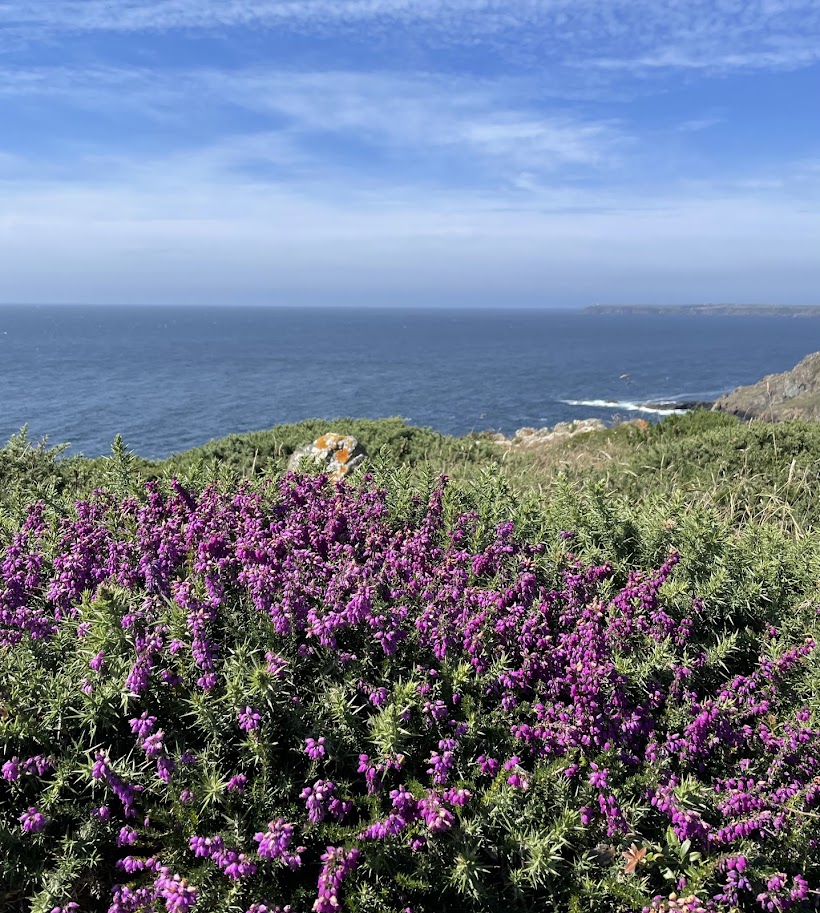
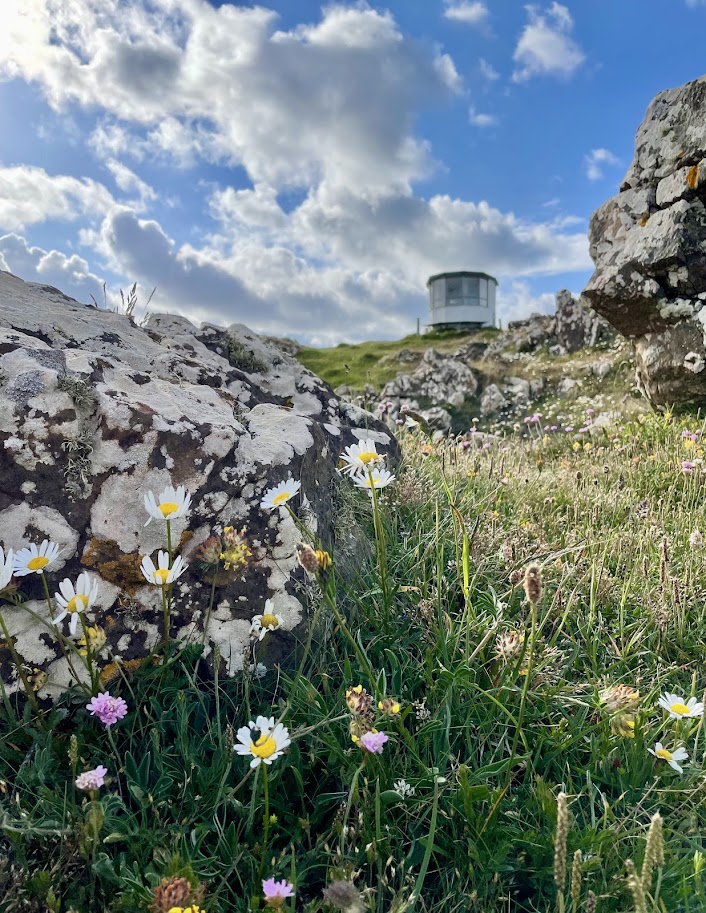
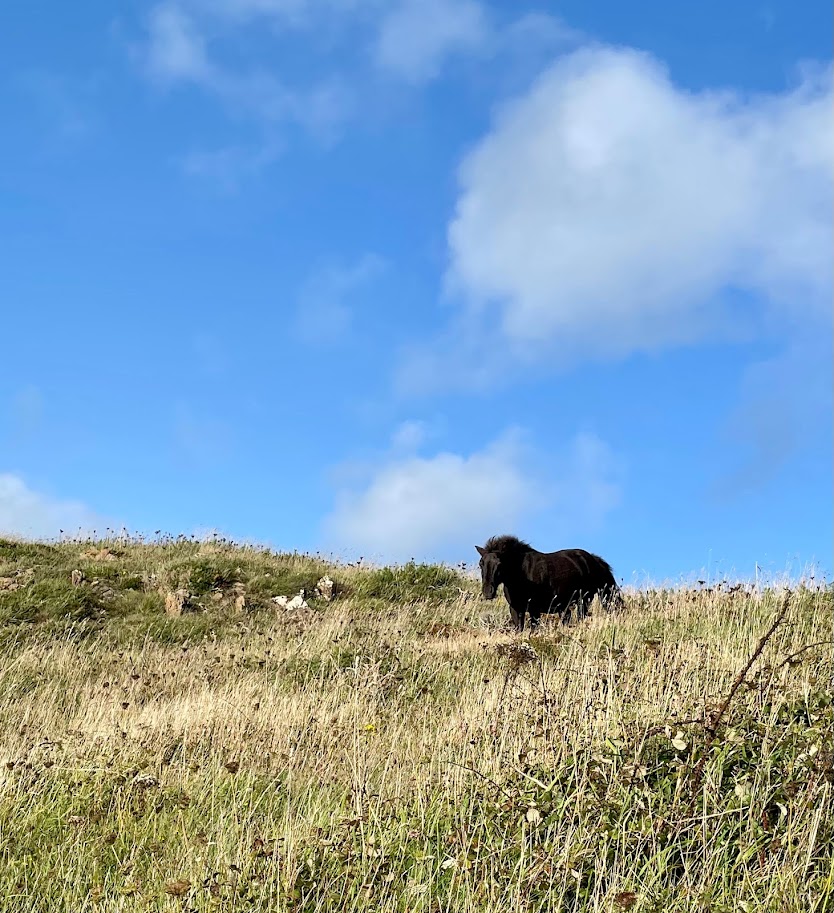
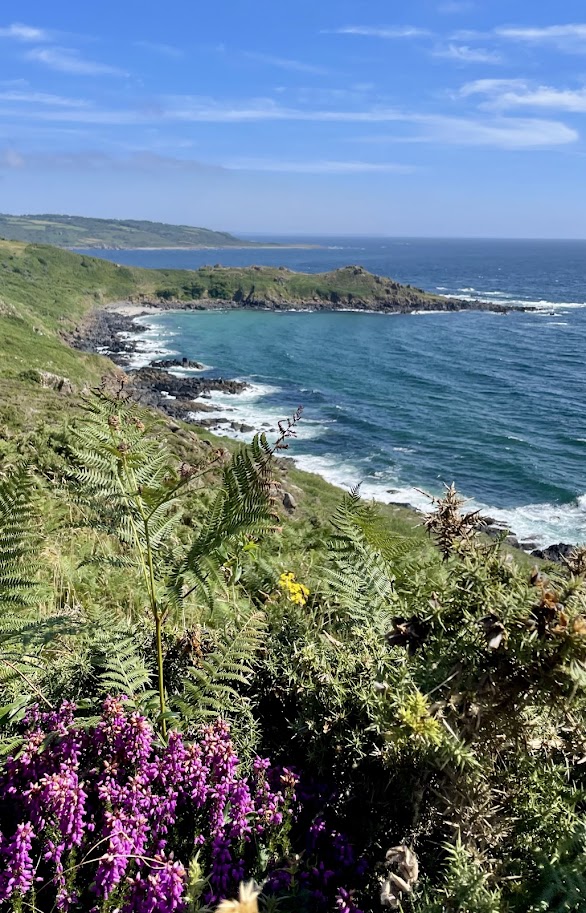
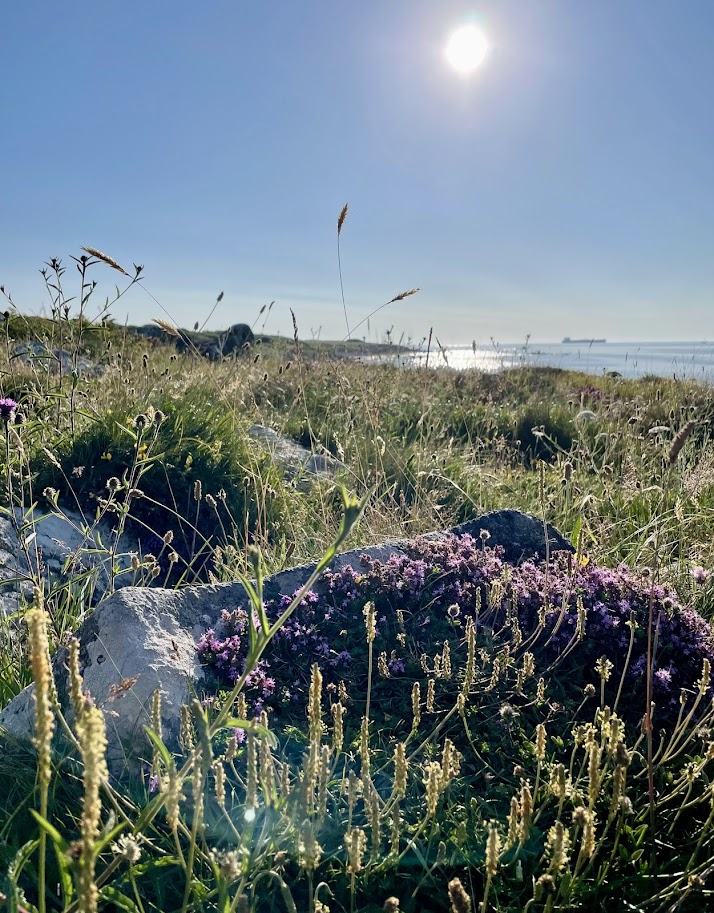
Ponies graze the headland to keep the foliage under control, allowing a host of wild flowers to flourish, different coloured flowers dominate depending on the season. Tiny delicate blue squill and bluebells in spring, shades of pink and purple heathers in summer to name but a few.

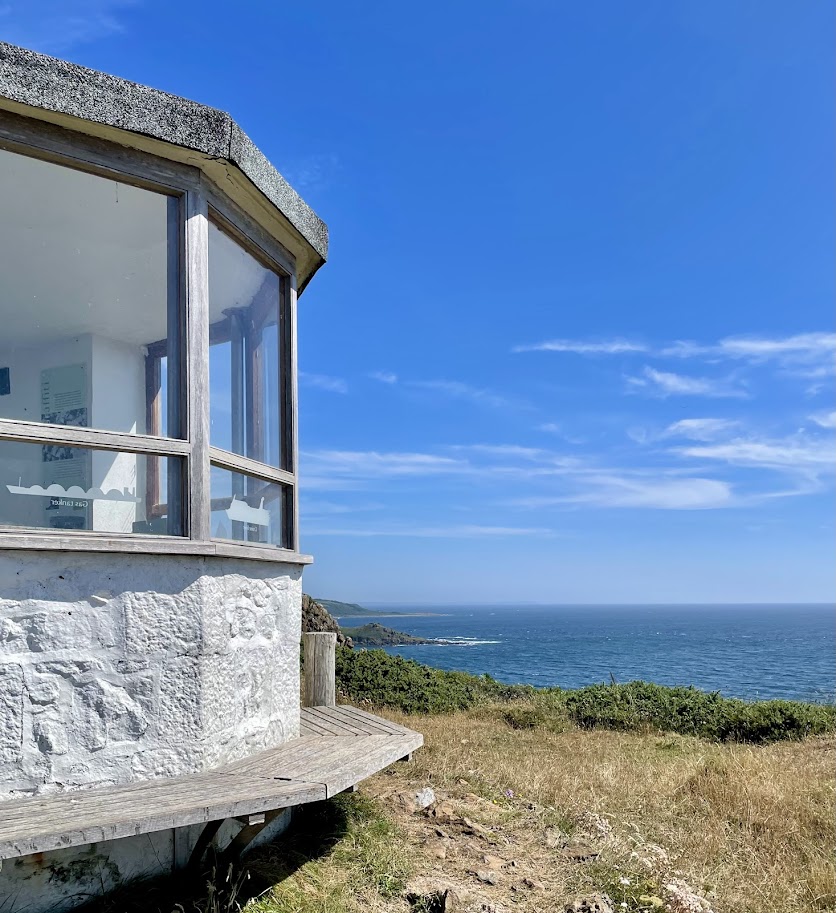
On the distant headland Black Head hut comes into view, when you are some way off. During the Napoleonic Wars a Naval Signal House was situated there, there is no evidence of the building’s stone walls. When WW1 coastal patrols were increasing there was no shelter on Black Head, in 1915 a purpose built Watch Hut was erected. For generations the Black Head has been used as a look out for shoals of pilchards, several spend there time carving their names and initials into the rocks. If you look closely several can still be found, dated from the 1870’s.

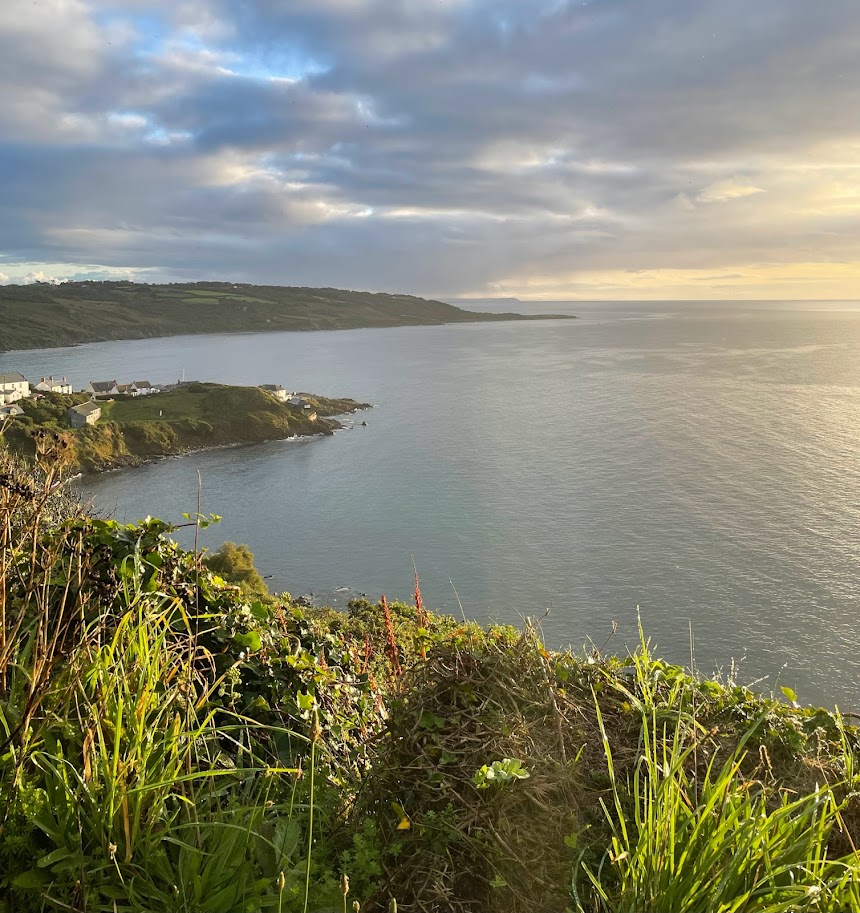
Once you pass Black Head you see views across Chynall’s Point, Lowland Point, Falmouth Bay and beyond. Continue along this path that runs along the cliff edge, before veering inland slightly beside the sculpture park and returning to the stepping stones across the stream used earlier in the walk. On joining the road turn right, walking downhill towards the old Headland Hotel, now apartments, take the path on the left before reaching them. Take the steps down and turn left towards Coverack, on this approach to Coverack you get good view of the Watch House perched on the cliff edge before The Paris. Strategically placed there in the late 18th century to house the local excise men to combat the smugglers. It was taken over in the 1820s by the Coastguard Service.

On joining the made up lane turn right in front of the coastguard cottages and walk down into the village, along the sea front to your starting point.

The practicalities:

Approximately 4.5 miles

Coverack has honesty box car parking – card or cash, public toilets are situated in the top car park. There are more public toilets by the harbour.

There are several lovely places to eat, including the Bay Hotel (dog friendly, set off the road above the beach with spectacular views) and The Loft, near the harbour.

The gift shops in the village sell many locally produced items and goods – The Old Mill Shop and The Seine Loft.

Pretty signs of a bygone flower industry on the Lizard Peninsula

The mild, temperate climate in Cornwall continues to encourage flowers to bloom earlier than in other parts of the country.

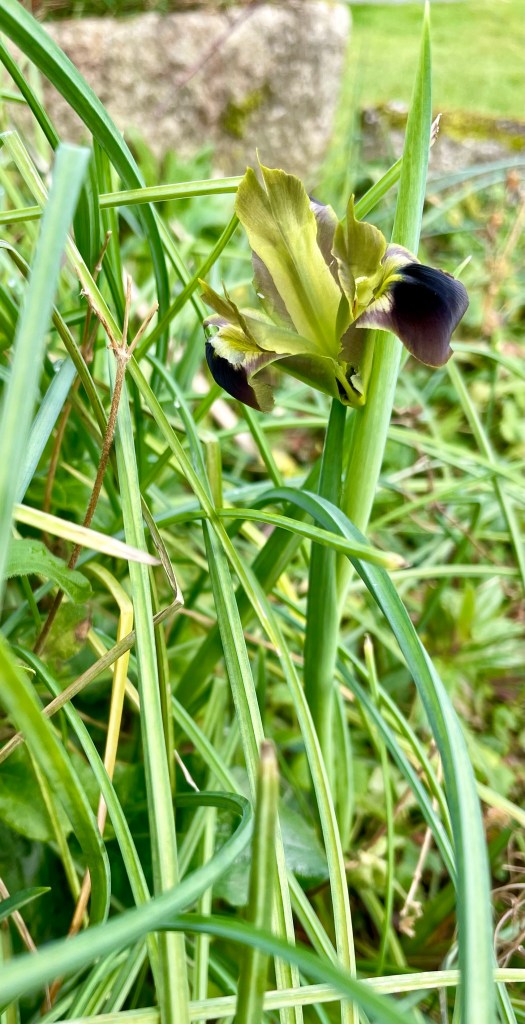
The arrival of railways in Victorian times allowed the development of a thriving flower industry in Cornwall, providing a way to get fresh flowers to markets. Violets, iris, daffodils and anemones to name a few.

In the past flowers were picked and transported in full bloom, nowadays they are picked at the bud stage. Photographed above is my Granddad picking iris at Wright Matthew’s flower farm near Mousehole.

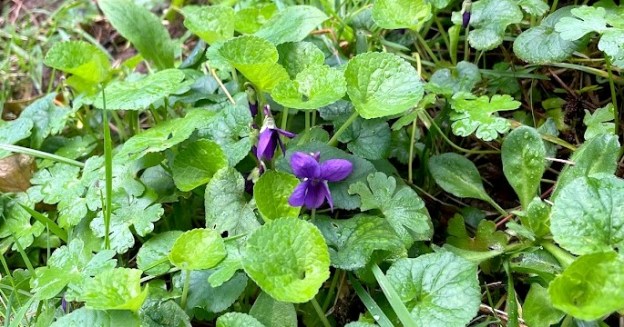
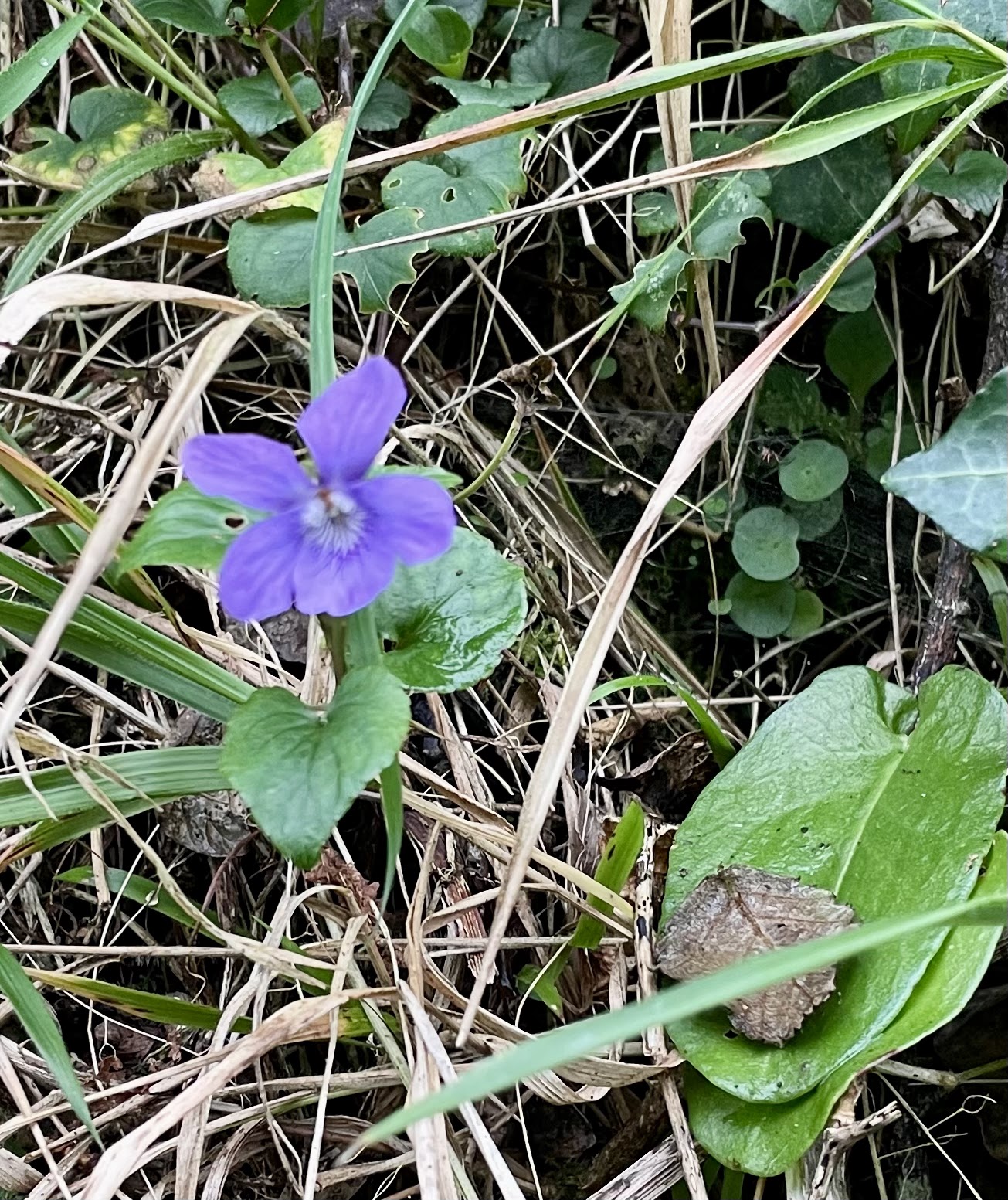
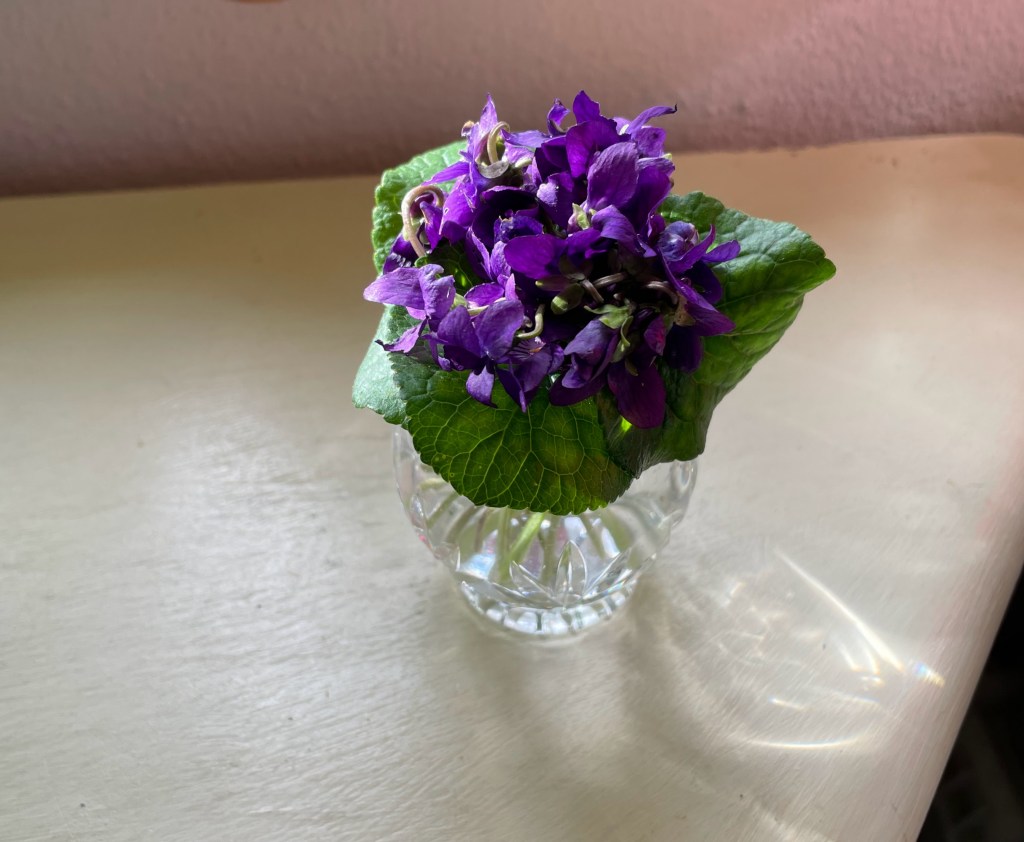
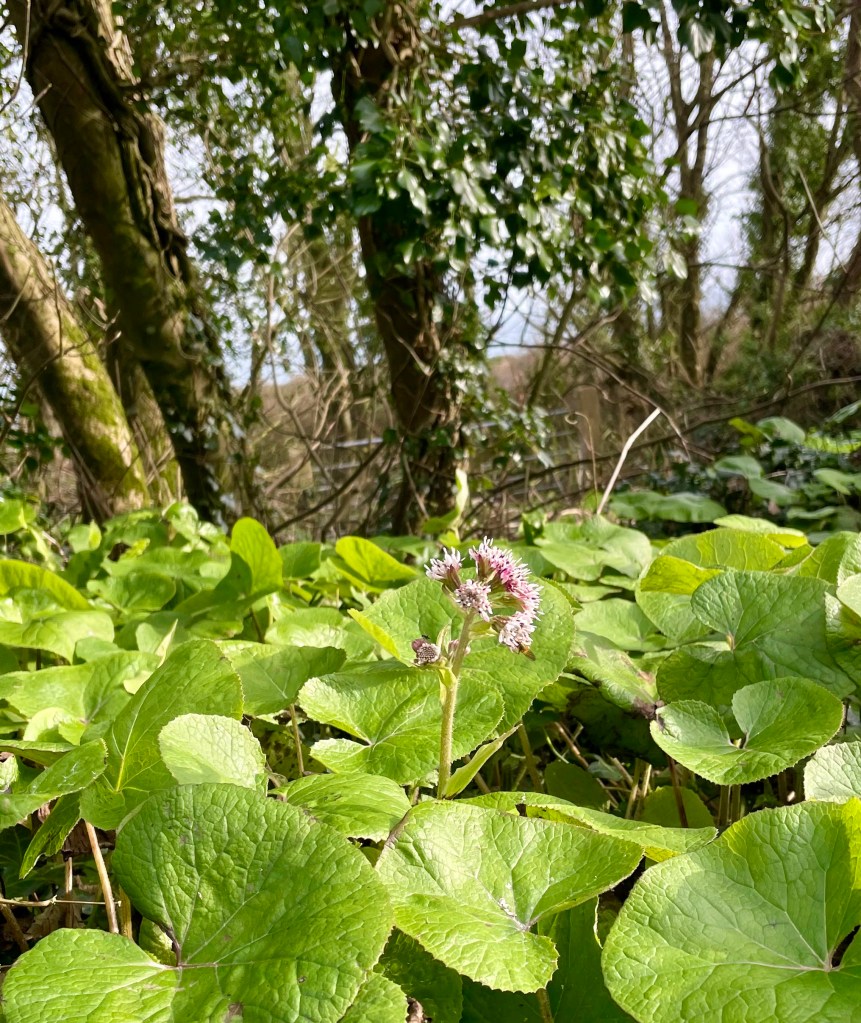
Violets were picked in small posies, surrounded by violet leaves to protect the delicate blooms. If violet leaves were damaged by frost and in short supply winter heliotrope foliage was used instead.

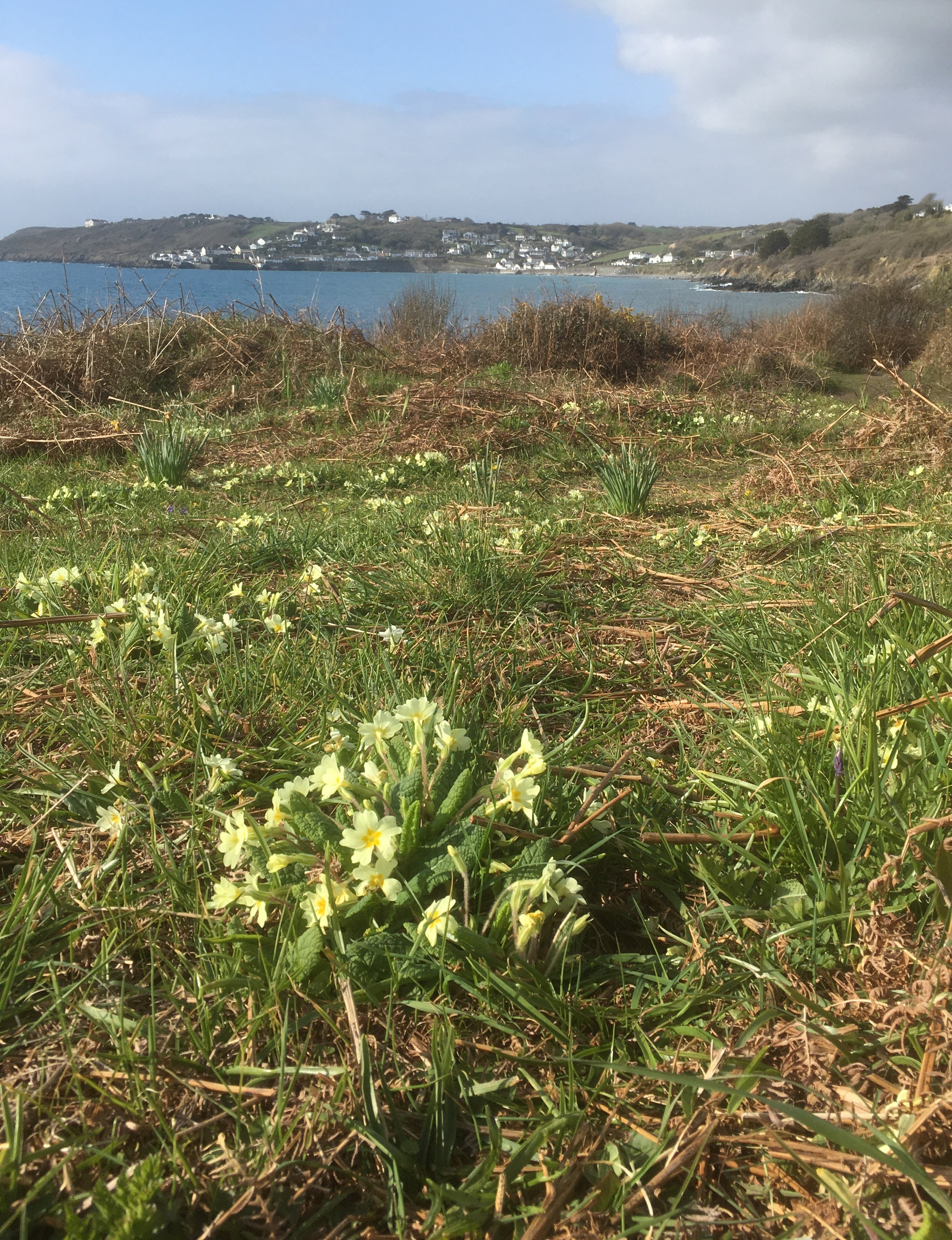
On special occasions such as Mothers’ Day or Easter if it was earlier enough in the year, my Mum and other children, picked primroses to send to City Market’s for pocket money. This was before it was recognised that picking wild flowers had a negative impact on nature.

Today many of our towns, villages and the hedgerows have flowers and foliage established as part of the commercial flower industry, that can be mistaken as native arrivals.

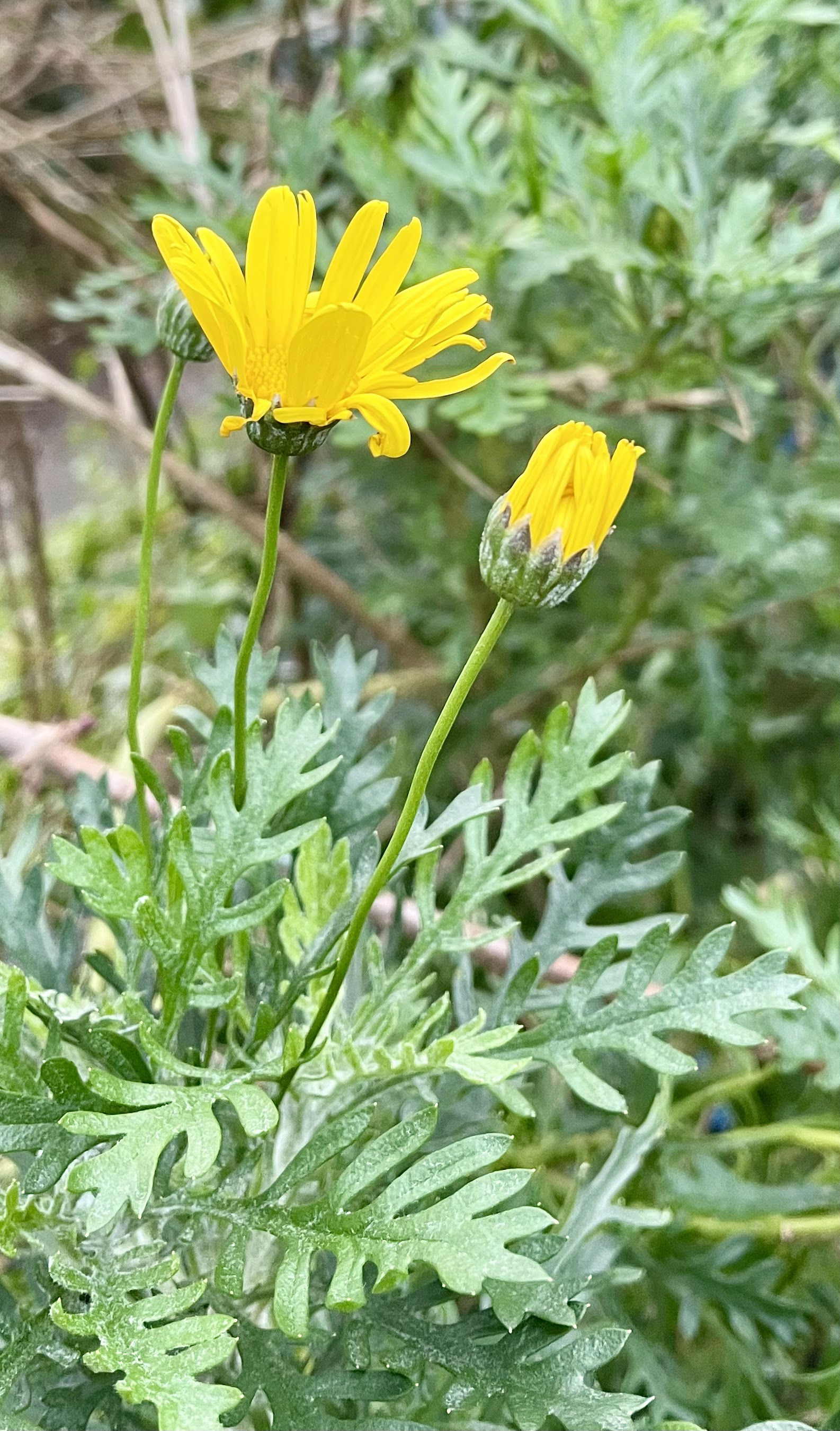
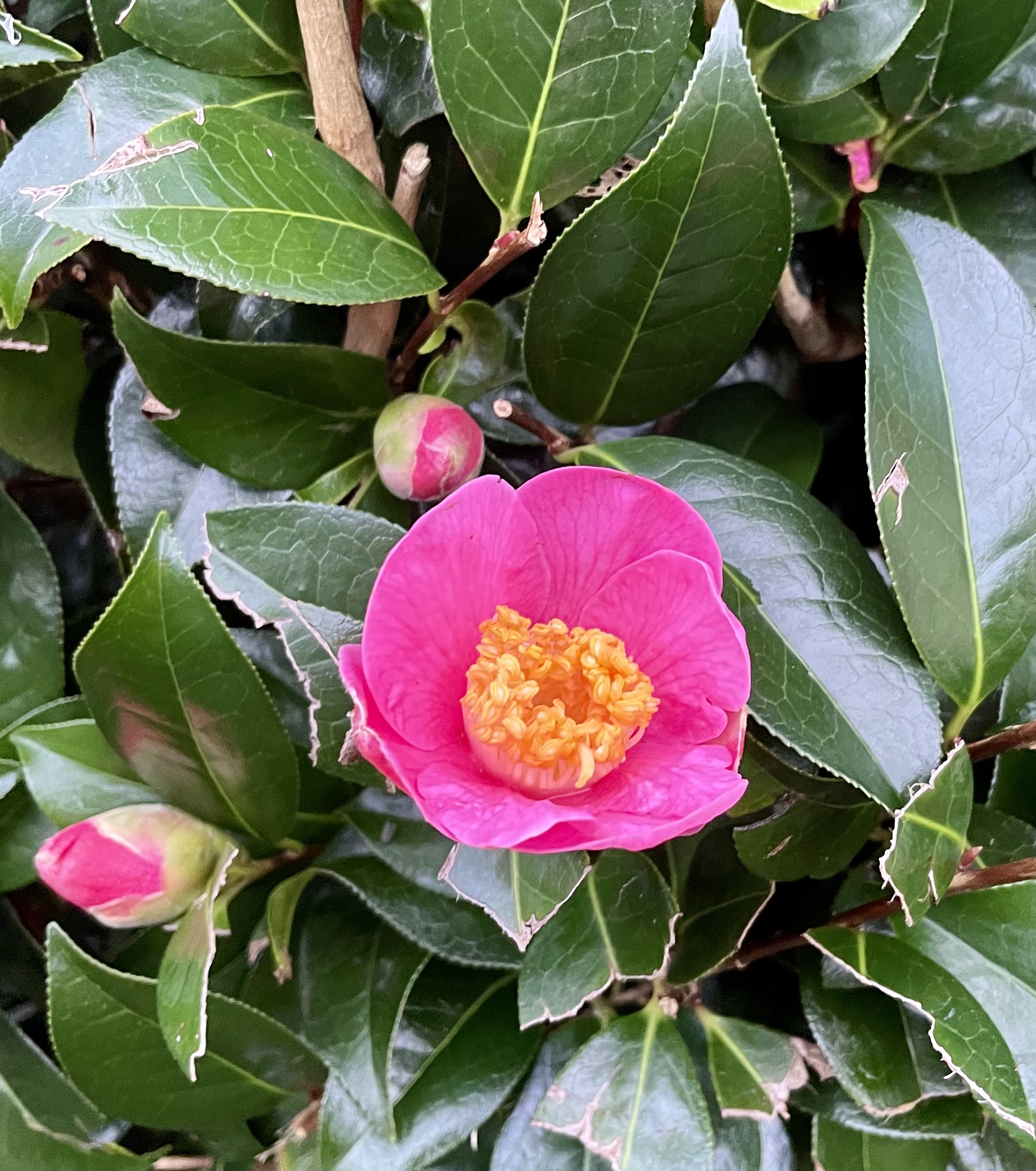
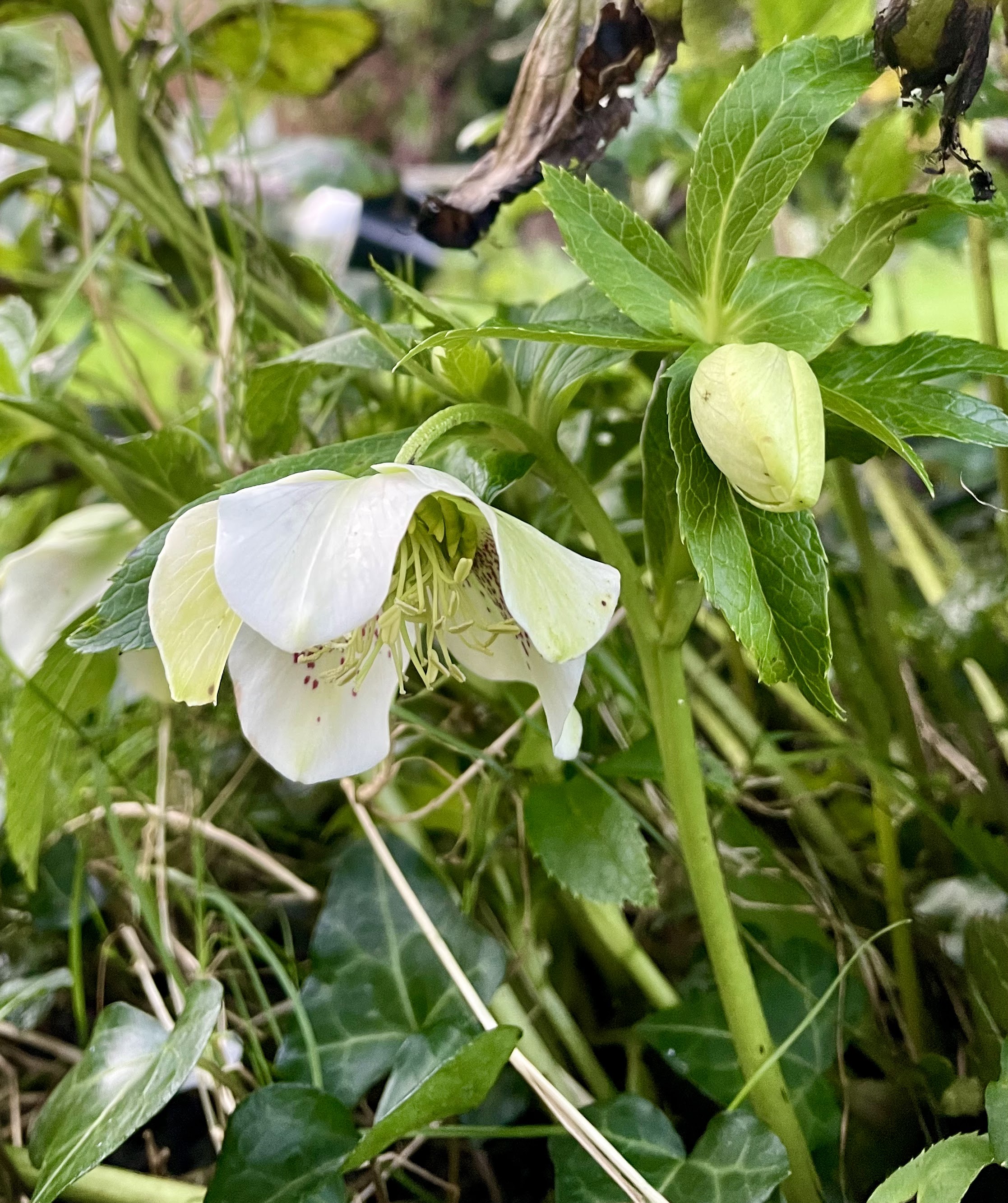
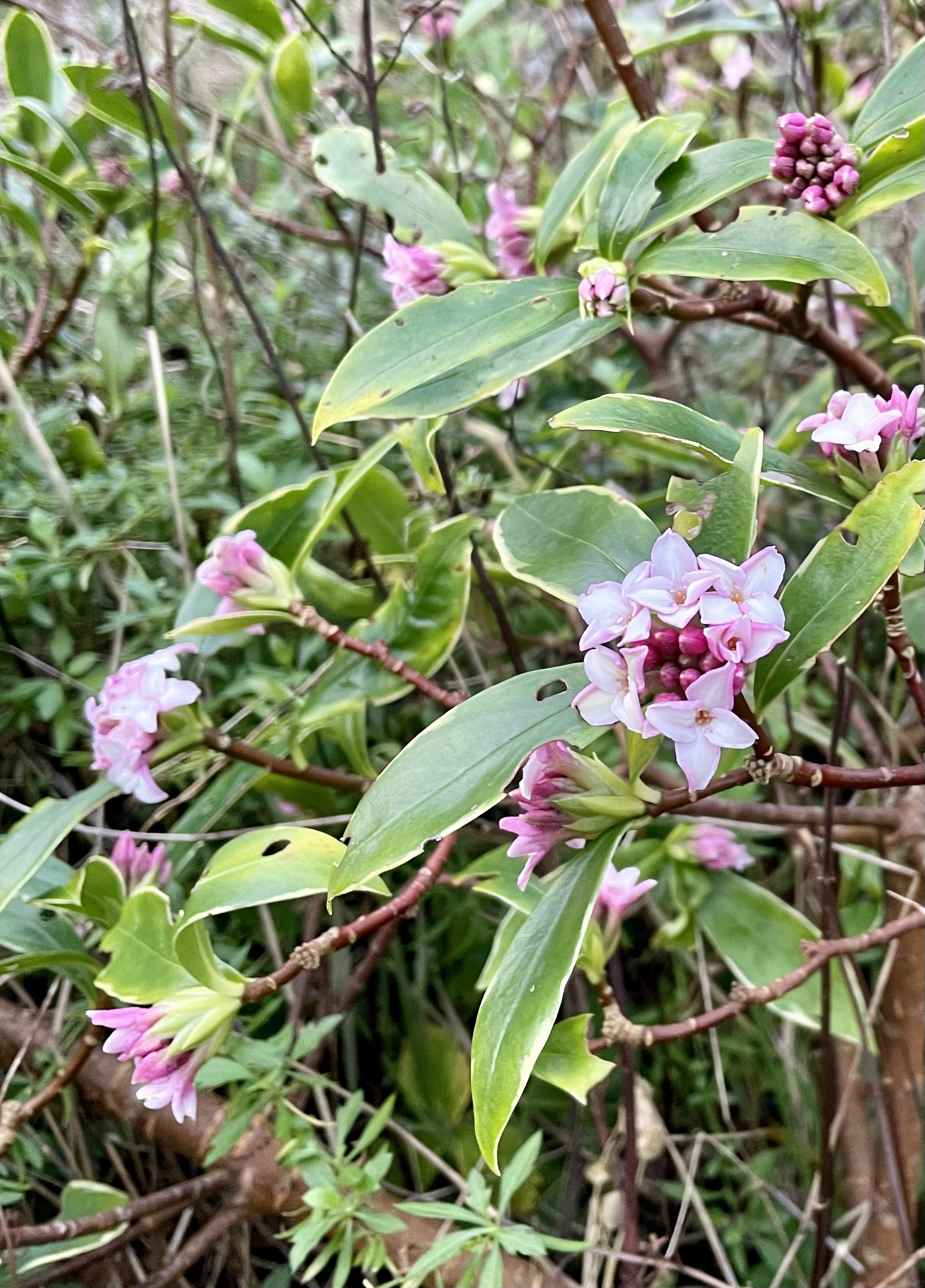
Flowers in bloom on New Years Day 2024 in this Cornish Garden

Day break was dry for the start of the 2024 here in Tregarne, but it didn’t last long! The winter has also been mild so far. This combination of mild, wet weather has encouraged early blooms.

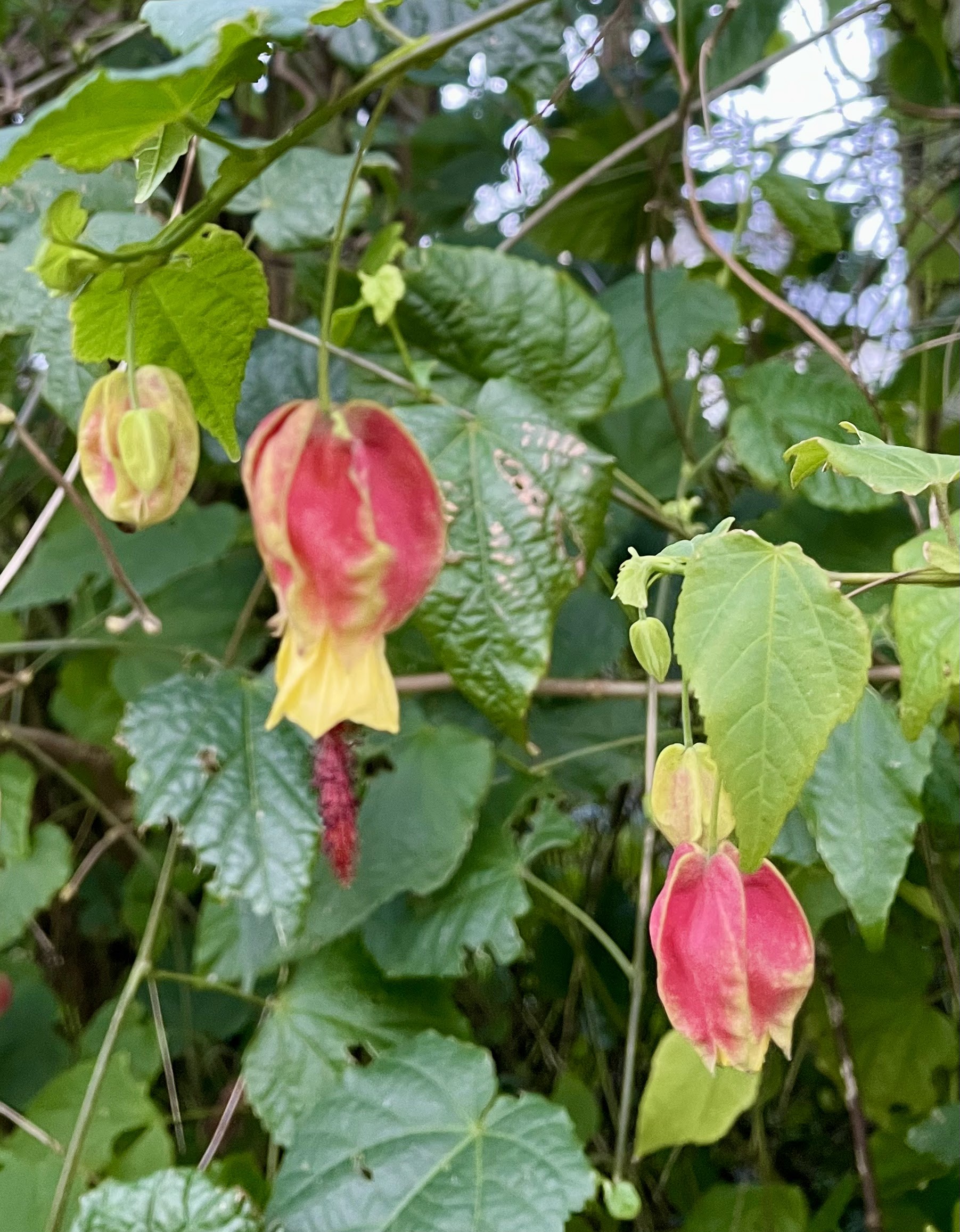
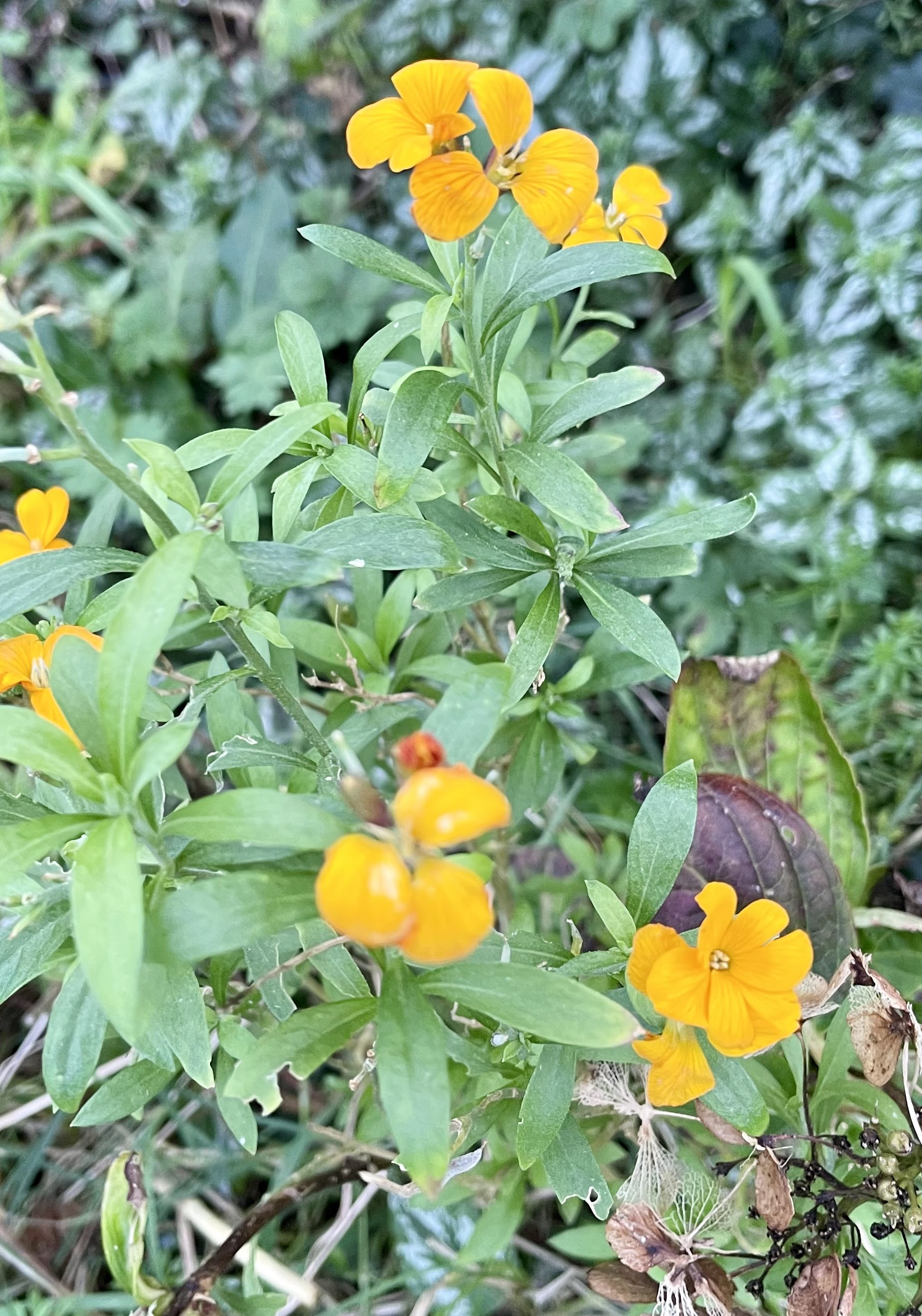
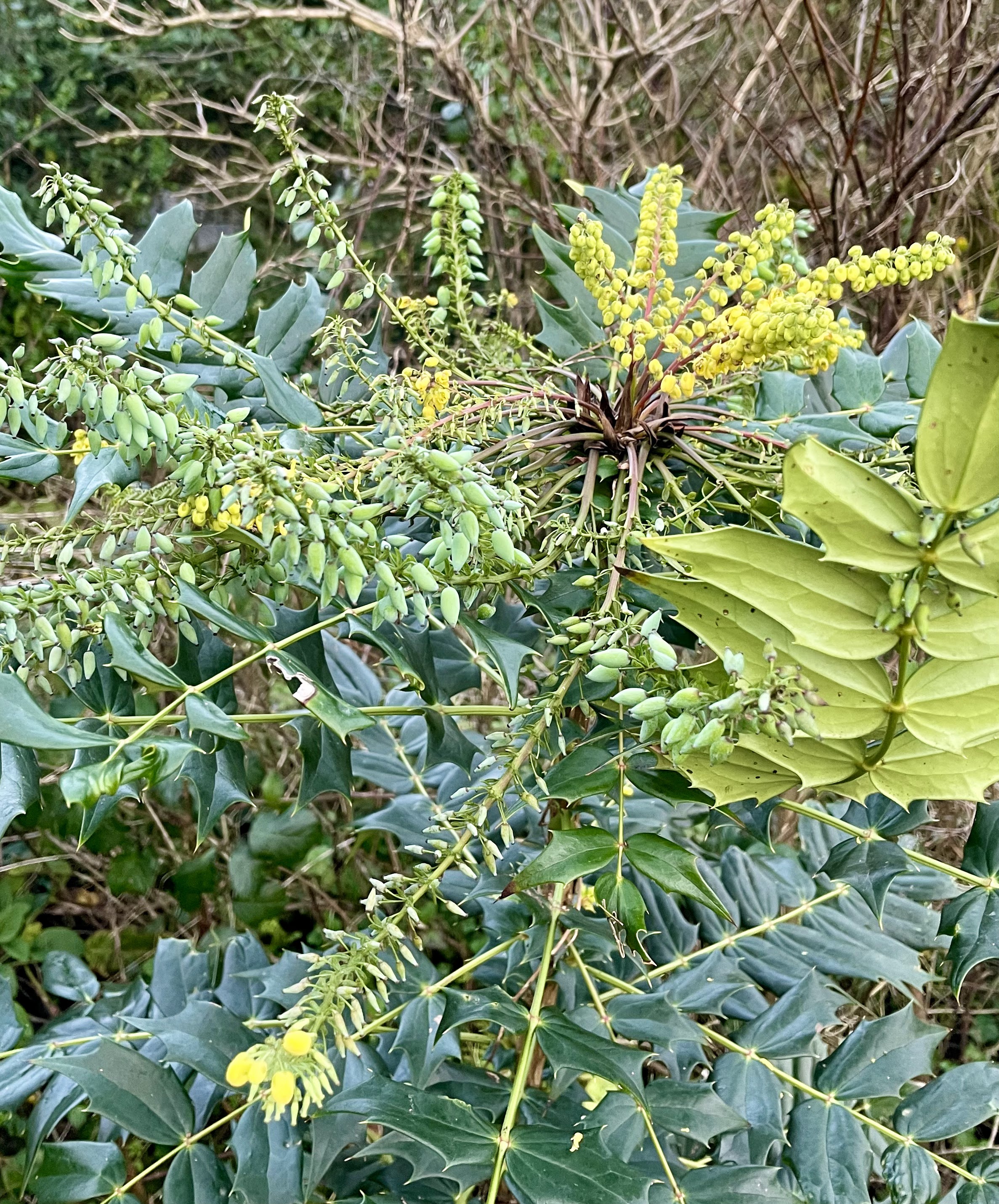
Photographed is just a few of the 24 plants flowering on New Years Day, that I hope you enjoy!